How Much Should I Feed My Dog? The Complete 2026 Guide
Calorie math, portion sizes by breed and a simple framework for getting your dog's daily food just right.
Standing in front of a food bowl trying to decide if you are feeding the right amount is one of the most common quiet worries dog owners carry. The truth is that the printed guidelines on a kibble bag describe an average, unspayed adult dog at moderate activity - and almost no real dog matches that profile.
This long-form guide walks through how to calculate a realistic daily portion using the same Resting Energy Requirement (RER) formula veterinary nutritionists rely on, how to adjust for life stage and lifestyle, and how to fine-tune over a few weeks based on what the scale and your dog's body shape tell you.
By the end you will know exactly how many calories, cups or grams your dog needs, how to split meals, where treats fit, and which mistakes silently lead to weight gain in most households.
Why the food bag rarely fits your dog
Feeding charts on packaging are built around population averages. They assume an adult dog of average activity that has not been spayed or neutered. Once you account for the fact that altered dogs need roughly twenty percent fewer calories, that puppies need significantly more, and that a working farm dog eats nothing like a couch companion, the chart starts to feel like a suggestion at best.
The most reliable starting point is a calorie target built around your specific dog. From there, you observe weight and body condition every few weeks and adjust by small amounts. That feedback loop - not the bag - is what keeps dogs lean for life.
The RER formula in plain English
Resting Energy Requirement is the number of calories a dog burns at rest. The formula is simple: RER equals seventy multiplied by the dog's body weight in kilograms raised to the power of zero point seven five.
Once you have RER, you multiply by a life-stage and activity factor - typically 1.6 for a neutered adult at moderate activity, 2.0 for a growing puppy, or 1.2 for a senior dog with reduced activity. Highly active or working dogs can need a factor of 2.5 or more.
Our free Dog Calorie Calculator does this math automatically and gives you cups, grams and a safe daily treat allowance in seconds.
A simple step-by-step feeding framework
Start by weighing your dog accurately. Step on a bathroom scale, note your weight, then step on again holding your dog. Subtract for an exact figure. Use the calorie target the calculator returns, then look at the kcal-per-cup figure on your food bag to convert calories into a measured portion. Split that portion across two meals a day for adults, three to four for puppies.
Reassess every four weeks. If your dog is gaining or losing more than five percent of body weight without a deliberate plan, reduce or increase the daily total by ten percent and watch again.
- Weigh your dog and enter the value in the calculator.
- Select life stage, activity and spay/neuter status.
- Convert daily calories into cups or grams using the food label.
- Weigh weekly for the first month, then monthly.
- Adjust by 10% increments if body condition drifts.
Portion size cheat sheet by weight
Use this as a quick sanity check after your calculator result. These figures assume a complete adult kibble at roughly 380 kcal per cup, fed to a neutered adult at moderate activity.
- 10 lb dog: ~390 kcal/day → about 1 cup.
- 25 lb dog: ~700 kcal/day → about 1¾ cups.
- 50 lb dog: ~1,145 kcal/day → about 3 cups.
- 80 lb dog: ~1,757 kcal/day → about 4½ cups.
- Puppies of the same weight typically need 1.5-2× these amounts.
Common feeding mistakes that cause silent weight gain
The single biggest source of weight creep is treats. A medium dental chew can easily contain a hundred and fifty calories, which can be ten percent of a small dog's daily intake in one bite. Training treats add up too - a thirty-minute session can sneak in two hundred calories without anyone noticing.
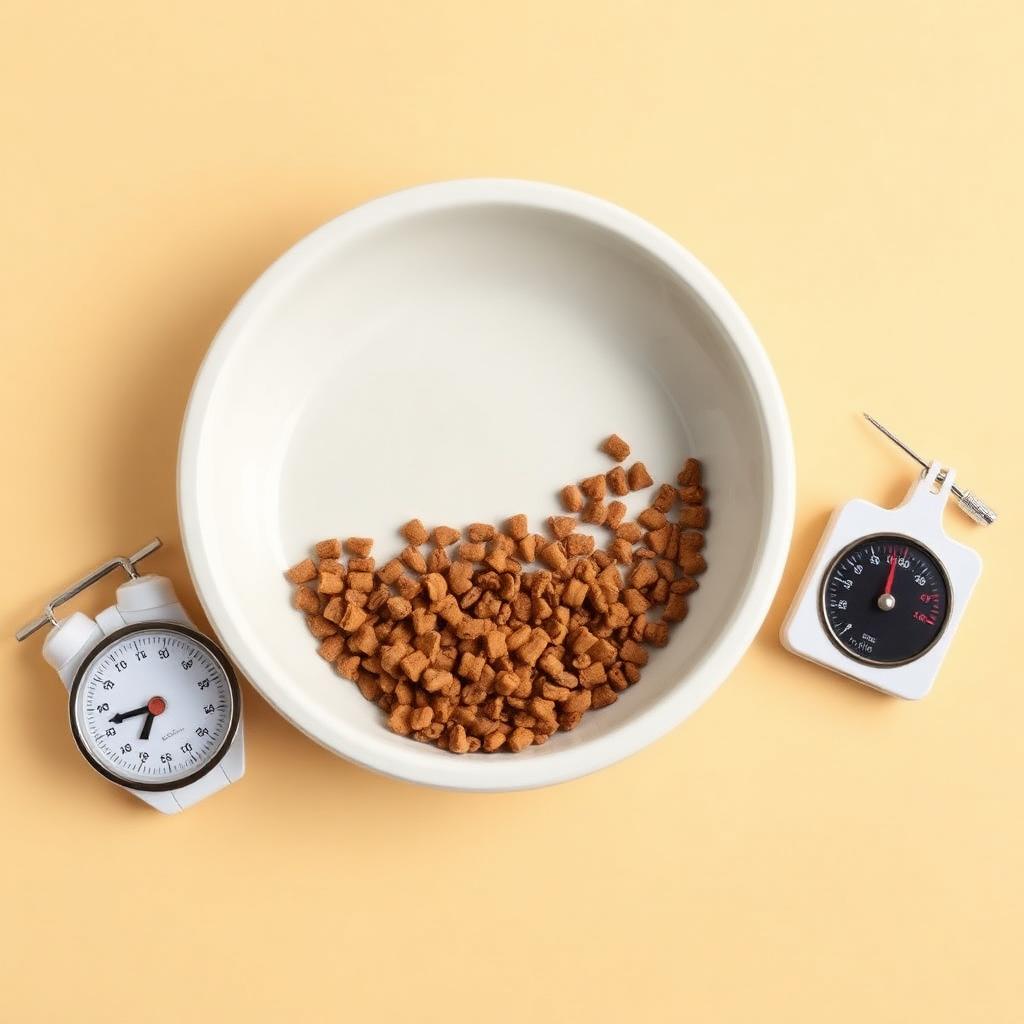
Another frequent mistake is measuring with a coffee mug or eyeballing. A cup of dry kibble can vary by up to thirty percent between brands and even within the same bag depending on shape and density. A simple kitchen scale solves this in seconds and gives consistent portions every meal.
Free-feeding - leaving food out all day - is the third major culprit. Dogs are opportunistic eaters and will quietly overeat when food is constantly available. Switch to scheduled meals and accidents stop.
How to adjust portions for activity and weather
Activity changes calorie needs more than most owners expect. A dog that hikes on weekends but lounges Monday to Friday does not need weekend-level food on weekdays. In winter, outdoor working dogs burn more calories regulating body temperature; indoor pets often need less because walks shorten.
A practical rule: if your dog's exercise drops by half for more than a week, drop food by ten percent. If exercise doubles, add ten percent. Re-check body condition after two weeks and fine-tune.
When to talk to your vet
If your dog gains or loses weight without an obvious cause, schedule a vet visit. Thyroid problems, Cushing's disease and several gastrointestinal conditions all show up first as unexplained weight changes. Sudden appetite loss for more than 24 hours, vomiting after meals, or persistent loose stool also warrant a professional opinion before you adjust food again.
Final word - feeding is a feedback loop, not a fixed number
The best feeders treat portion size as a living number, not a sticker on the side of the bag. Start with a personalised calorie target, weigh accurately, watch body condition, and adjust in small steps. Over time you will know your dog so well that you barely need the calculator - but it will always be there for the next life-stage change.
Reading a body condition score without a vet visit
Your hands are more reliable than the scale for tracking whether a portion is working. Once a week, run flat palms down your dog's ribcage. You want to feel each rib the way you can feel the knuckles on the back of your own hand, easy to count without pressing.
View from above at the same time. A healthy waist tucks in behind the ribs. From the side, the belly should rise slightly toward the back legs. If those two shapes are fading, the portion is too generous even if the scale has not moved much yet.
How life stage quietly changes the number
Puppies burn calories on growth as well as movement, so they need roughly double the adult rate per pound for the first four months, then taper. Adolescent dogs between six and twelve months often stay close to puppy calories but shift toward two meals a day.
Adult calories drop again after spay or neuter, sometimes by twenty percent within weeks. Senior dogs need slightly fewer calories again, but the same protein, so a senior-labelled food or a smaller portion of a high protein adult food usually works well.
- Puppy 8 to 16 weeks: high calorie growth phase, 3 to 4 meals a day.
- Adolescent 4 to 12 months: taper toward adult amount, 2 to 3 meals.
- Adult 1 to 7 years: maintenance calories, 2 meals.
- Senior 7 years plus: 10 to 20 percent fewer calories, same protein.
Wet, dry and mixed feeding done right
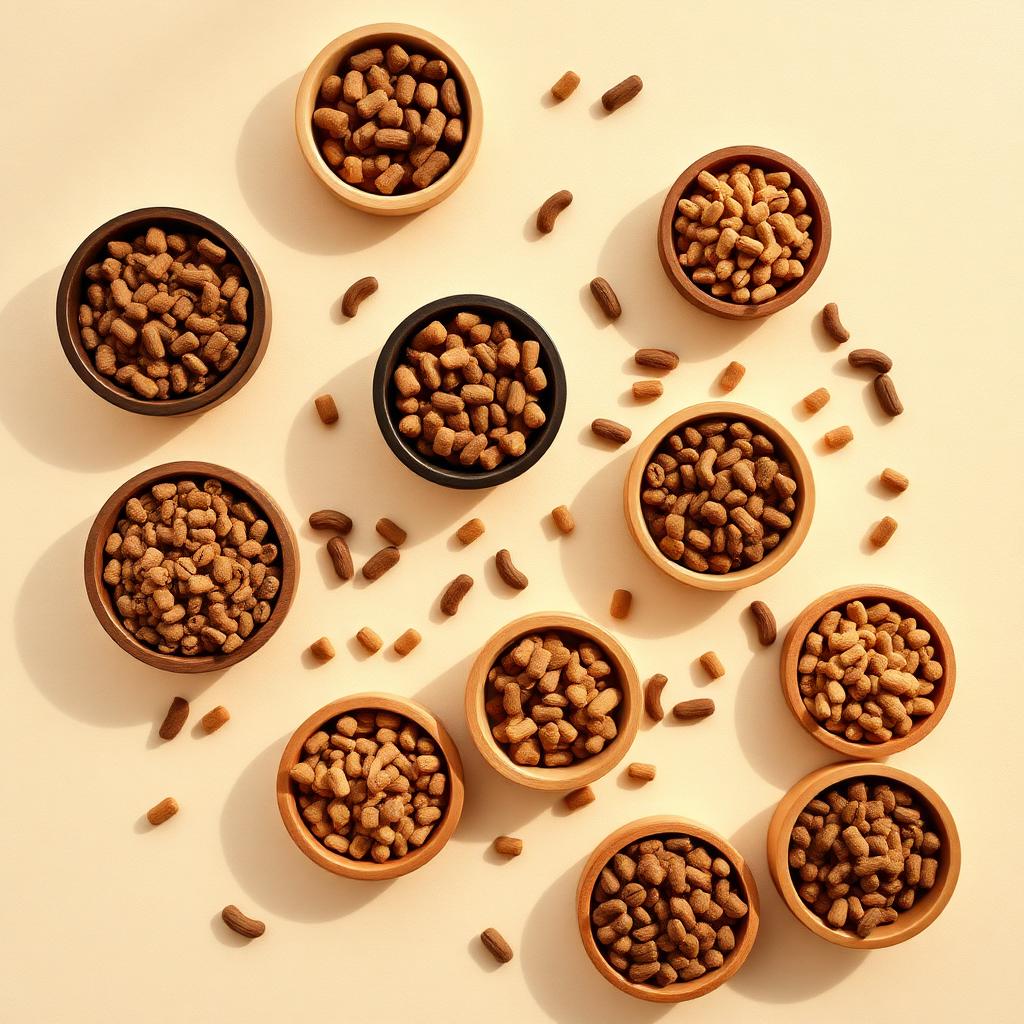
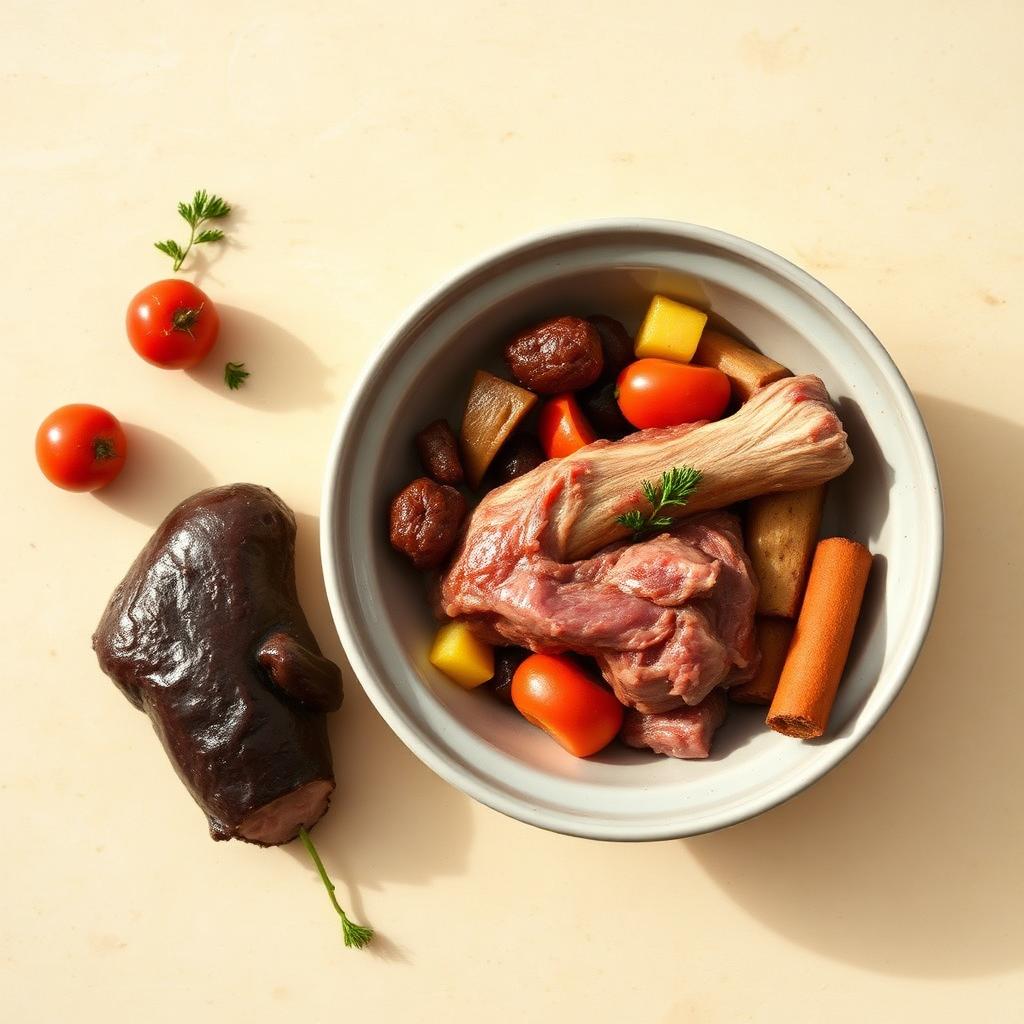
Kibble is calorie dense and easy to portion. Wet food has more water and often more palatable protein, which helps fussy eaters and dogs prone to urinary issues. Mixing the two is fine as long as the daily calorie total is respected.
The safest way to mix is to work out your dog's daily calories first, then split them, for example seventy percent from kibble and thirty percent from wet food. Both bags list kcal per gram or per cup, so the maths stays simple.
Treats, toppers and the ten percent rule
Vet nutritionists suggest no more than ten percent of daily calories from anything that is not a complete food. That includes training treats, dental chews, cheese cubes and human food scraps.
For a twenty pound dog on around 600 kcal a day, ten percent is only sixty kcal, which is roughly one small biscuit or a few blueberries. Weighing treats once, then eyeballing the same size going forward, is far more accurate than trusting packaging counts.
Fresh water, meal timing and gut comfort
Meal timing matters as much as portion size for dogs prone to reflux or gassy stomachs. Two meals spaced at least eight hours apart, with a short walk before rather than straight after, reduces vomiting and bloat risk in deep chested breeds.
Fresh water should always be available. A rough guide is one ounce per pound of body weight per day, more in hot weather or after exercise. Water intake that suddenly doubles without a heatwave is worth a vet call.
A four week feeding audit any owner can run
Set aside a notes page or a simple spreadsheet with columns for date, weight, calories fed, treats given, exercise minutes and stool score. Four weeks of honest tracking almost always reveals the one habit driving weight drift.
In week one, do not change anything. Just record. In week two, adjust portions or treats by ten percent based on what the data shows. In week three, hold steady. In week four, reweigh and compare. This small ritual has fixed feeding problems that supplements and food switches never could.
Owners who run this audit once often keep the habit as a monthly check in. It takes under two minutes a day, catches problems early, and turns feeding into a decision instead of a guess.
Working breeds, sporting dogs and the calorie ceiling
A weekend hike does not double a whole week of calories, but a dog that runs a full agility course on Saturday and Sunday genuinely earns extra fuel on those days. The trick is to add on active days and drop back on rest days rather than raise the baseline.
Sled dogs, herding dogs, protection sport dogs and gun dogs in season can eat two to three times the maintenance number of a couch companion of the same weight. Their bodies have adapted to that workload, and cutting them back for aesthetic reasons is unkind.
The signal you are getting it right is stable body condition and stable energy through the season. If the coat looks dull or muscle tone drops during heavy work, calories are too low. If a belly starts to appear, calories are too high.
Puppy growth curves and the large breed exception
Small and medium breed puppies do best on a fairly steady climb in calories until they reach adult size around ten to twelve months. Large and giant breeds are different. Their growth plates close later and pushing calories high accelerates bone growth in a way that increases the risk of hip dysplasia and other joint problems.
For breeds expected to exceed thirty kilograms as adults, aim for a lean growth trajectory. Ribs easily felt, a visible waist, a soft body but no chunk. Slightly slower growth to the same eventual adult size is protective, not harmful.
Feed a large breed puppy formula specifically formulated with controlled calcium, phosphorus and calorie density. Adult food is not a good substitute during the growth phase, and standard puppy food often runs too rich for a growing giant.
The behaviour side of feeding
Meals are one of the most predictable emotional events of a dog's day. Making them calm and quick, in a consistent spot, using a bowl the dog knows, gives an anchor of security many owners underestimate.
Slow feeder bowls and puzzle feeders extend meal time and reduce gulping in fast eaters. For anxious dogs, hand feeding one or two meals a week can meaningfully strengthen the bond and reduce food guarding.
Where possible, feed multi dog households in separate spaces. Even friendly dogs eat faster and less comfortably when another dog is watching, and food guarding often starts as a low grade stress the household has learned to ignore.
Frequently asked questions
Should I feed my dog once or twice a day?
Twice daily is best for adult dogs - it keeps blood sugar steady and reduces begging. Puppies under six months usually do well with three meals.
Do small dogs need fewer calories per pound than large dogs?
Actually, no. Small dogs have a higher metabolic rate per kilogram and often need slightly more calories per pound of body weight than large breeds.
How long before I see results after adjusting portions?
Plan to monitor for at least two to four weeks. Healthy weight change is around one to two percent of body weight per week.
Is wet food better than dry?
Both can be complete and balanced. Wet food has more moisture and is calorie-dense per gram, so portion control matters even more.
Can I mix kibble and home-cooked food?
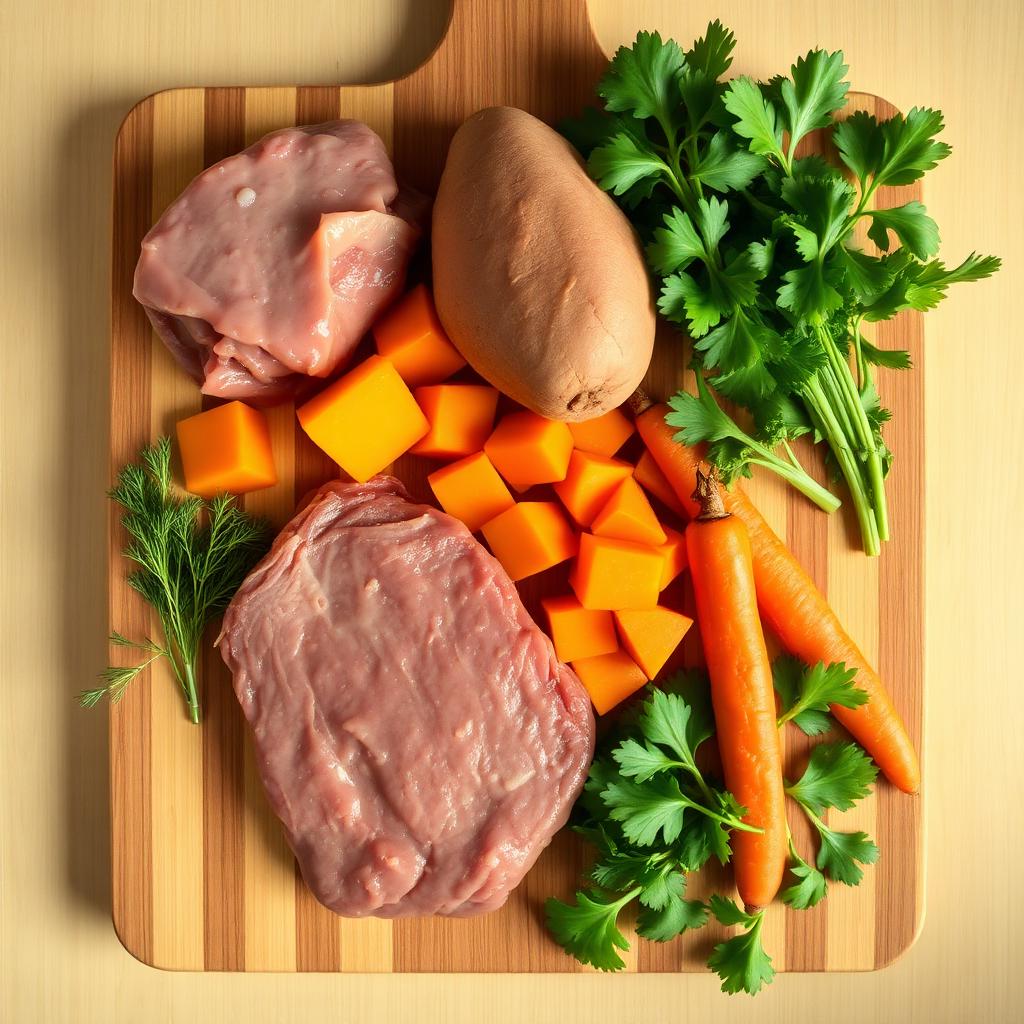
Yes, as long as the total daily calories are balanced. Keep home-cooked toppers to about 20% of daily calories unless you are following a vet-formulated recipe.
Can I use a measuring cup instead of a scale?
You can, but expect up to a thirty percent error between cups of the same kibble depending on how it settles. A cheap kitchen scale removes the guesswork in about five seconds a meal.
What if my dog leaves food in the bowl?
Pick the bowl up after fifteen minutes and offer the same portion at the next meal. Grazing all day makes it very hard to know what your dog actually eats and quietly encourages picky habits.