How to Stop Your Dog Pulling on the Leash - Without a Battle
A reward-based four-week plan that replaces yanking and frustration with quiet, focused walks.
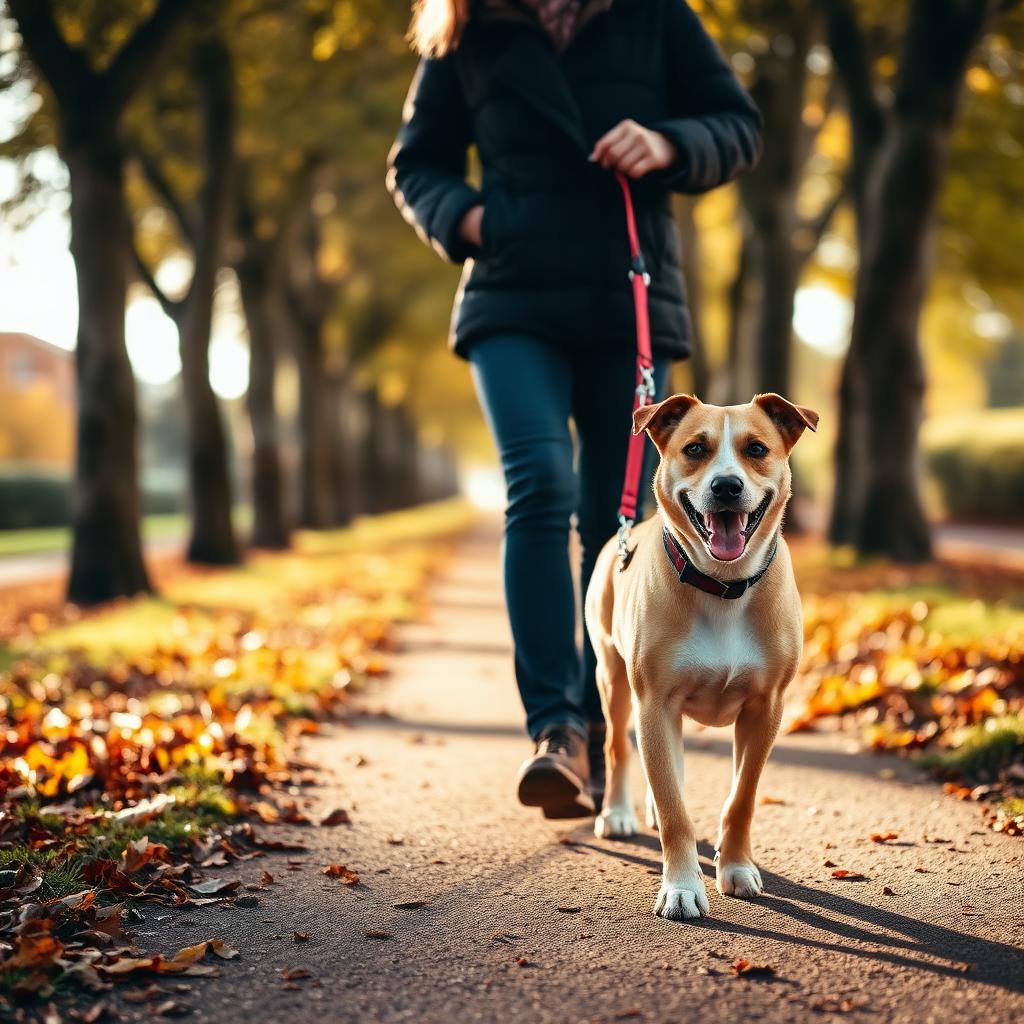
Pulling is almost always rewarded by accident. Every time a dog reaches a sniff spot, another dog or the front door faster by pulling, the behaviour is reinforced. After months or years of this pattern, the dog genuinely believes pulling is how walks work.
The fix is mechanical first and emotional second - change the reinforcement pattern, then build engagement. This guide gives you a four-week plan, the right equipment, and the single rule that does most of the work.
The single rule that changes everything
If the leash goes tight, you stop walking. Not yanking, not scolding - just stop. The moment the leash softens, even by a centimetre, you start walking again. Done consistently for a few weeks, this single rule rewires the association: tight leash means walk stops, loose leash means walk continues.
The first few walks will feel painfully slow. You will barely cover a block. That is normal and expected - you are not exercising your dog this week, you are rewiring a habit.
Build engagement at home first
Before you can ask a dog to focus on you outside, they need to find you interesting. Practice short eye-contact games inside, then in the garden, then in a quiet street, before progressing to busier environments.
Reward every check-in with a small treat or verbal praise. Within a few days most dogs start glancing up at you naturally, which is the foundation of every loose-leash walk.
Equipment that actually helps
A well-fitted front-clip harness rotates a pulling dog gently back toward you, reducing leverage without choking. Head halters can work for stronger dogs but require an adjustment period.
Avoid prong collars and shock collars - modern training science consistently shows reward-based methods produce more reliable results without fallout like anxiety, aggression or redirected reactivity.
- Front-clip harness - first choice for most dogs.
- 6-foot fixed-length leash - no retractables for training.
- High-value treats in a hip pouch within easy reach.
- Optional: head halter for strong pullers needing more leverage.
The four-week practice plan
Week 1 (foundation): 5 minutes a day in your garden or quiet street, practising the stop-and-go rule. Reward every loose leash.
Week 2 (low distraction): 10 minutes in a familiar quiet area. Add direction changes - turn left or right unexpectedly so your dog learns to watch you.
Week 3 (medium distraction): 15 minutes in a moderately busy street. Increase distance from triggers when needed - distance is your friend.
Week 4 (real life): 20 minutes on your normal walk route. Expect 70-80% reliability by now; the rest comes with months of consistency.
When your dog pulls toward another dog
That is usually frustration or excitement, not stubbornness. Increase distance, reward calm noticing ('look at that dog - yes, here is a treat for being calm'), and rebuild engagement before getting closer. This is called the 'engage-disengage' game and it transforms reactive walkers within a few weeks.
Common mistakes that slow progress
Inconsistency is the biggest killer. If half your walks allow pulling because you are in a hurry, the dog learns pulling sometimes works - the most powerful reinforcement pattern that exists.
Another mistake is making walks too long during training. A focused 10-minute walk teaches more than a frustrated 45-minute walk. Use a separate sniff-and-explore session on a long line for decompression so your training walks can stay short and structured.
Why old school corrections make pulling worse long term
Prong collars, choke chains and lead jerks all rely on pain or discomfort to interrupt pulling. The behaviour often stops in the moment because the dog is startled, but the underlying reinforcement, reaching the sniff spot, has not changed.
Studies published in the last decade consistently show reward based training produces more reliable long term behaviour with lower rates of anxiety, aggression and lead reactivity. Modern trainers rarely use aversive tools for this reason.
Loose lead walking versus formal heel
A loose lead walk is not the same as a competition heel. Loose lead means the clip hangs in a soft J shape, the dog is somewhere within a comfortable arc, and both of you can move freely.
Formal heel is a much stricter position glued to your left knee. Ask for it in short bursts, for crossings or busy pavements, and let loose lead be the default. Trying to demand formal heel for a whole walk usually fails within a week.
Using distance as a training tool
Distance is the most powerful lever you have when a dog is over threshold. If your dog cannot think at fifteen metres from another dog, work at twenty five metres. Success at a comfortable distance rewires the response faster than repeatedly failing up close.
Cross the road, step behind a car, or turn 180 degrees. Every calm noticing at a workable distance is a small win, and wins add up faster than most owners expect.
- Notice the trigger at a distance your dog can still eat treats.
- Mark the noticing with a calm word and reward.
- Turn or move away before your dog reacts.
- Repeat at slightly shorter distances over days, not minutes.
- Never march closer just because you feel you should.
The sniff walk as a separate activity
Sniffing is mentally exhausting for dogs and lowers cortisol. A twenty minute sniff walk on a long line often calms a dog more than an hour of forced marching heel.
Split your week. Two or three short structured training walks, plus three or four sniff walks where the dog leads and the rules relax. This combination transforms most pullers within a month.
Troubleshooting the plateau at week three
Almost every owner hits a wall around week three. The dog was improving, and now progress feels flat. The usual cause is that criteria were raised too fast, distraction levels went up, or reward frequency dropped.
Go back one step for two or three sessions. Lower the distraction, raise the treat rate, shorten the session, and progress will restart. Training is almost never linear.
Reactive dog quick start on a walk
Reactive lunging on lead is usually rooted in frustration or fear, not aggression. The fix runs in parallel with loose lead work and uses the same currency: distance, calm noticing and reward.
Carry a pouch of high value treats. The moment your dog sees another dog at a workable distance, before they react, mark it with a calm word and feed. Turn away and reset. Over weeks, the sight of another dog starts to predict food and check in with you instead of the lunge.
If your dog is already over threshold, do not train, retreat. Cross the road, step behind a car, or turn around. Every failed attempt at close distance sets the plan back by days. Distance is not avoidance, it is the training tool.
Choosing the right harness and lead combination
A well fitted Y shaped front clip harness sits behind the shoulder blades, does not press on the throat, and does not restrict the forward reach of the front legs. Poorly fitted harnesses either slip forward and choke or restrict movement and cause a bunny hop gait.
For most dogs a six foot fixed lead is right for training and daily walks, and a fifteen to twenty foot long line is right for sniff walks in safe open spaces. Retractable leads are convenient but reward pulling by design and are best avoided during training.
Replace equipment when it wears out, not when it fails. Harness stitching, lead clips and collar loops all weaken over months of use, and a snapped lead in a busy street is exactly the moment you do not want cheap equipment.
Building focus with a look at me cue
A reliable look at me or watch cue is the single most useful tool for a lead reactive dog. Practise it inside first, then in the garden, then on quiet streets, with a treat rate high enough to compete with the environment.
The cue should predictably earn eye contact for two to three seconds and a reward. Once it is solid, ask for it just before something triggers your dog, not after. Prevention is easier than recovery.
Over weeks the cue becomes a reflex both of you can rely on. Most dogs generalise it to any moment of tension, and many owners find it useful long after the pulling itself has resolved.
Weather, terrain and the shape of the walk
Weather changes what a walk can be. In heat, walk in early morning or late evening on cool ground and let sniff time replace pace. In cold, keep old dogs moving to stay warm and shorten sessions.
Terrain matters too. Slippery ice and wet grass increase injury risk for young and older dogs. Long grass hides ticks and thorns. Concrete for a full hour is hard on joints. Vary the surfaces where you can.
The shape of the walk is a training decision. A short focused loose lead loop followed by a long sniff on a long line is often better exercise than a straight forty minute march. Design the walk your dog needs, not just the walk that fits your route.
Managing the busy street commute walk
The walk to daycare, the school run or the vet appointment is often the toughest environment for a pulling dog. Do not use it as a training session. Use a well fitted no pull harness, take the direct route, and reward calm walking without asking for perfection.
Save training walks for quieter times and quieter places. Two focused fifteen minute sessions a week in an easy environment do more for pulling than daily failed attempts in traffic.
Over weeks the training walks change what your dog does on the commute walks, not the other way around. Trust the process and stop grading yourself on the hardest walks of the week.
When to bring in a qualified trainer
If pulling is paired with lunging, growling, freezing or biting, or if you feel physically unsafe on walks, book a session with a qualified force free trainer or a veterinary behaviourist. This is not failure. It is the right tool for the job.
Look for credentials from recognised bodies, transparent pricing, and a training philosophy that does not rely on pain, fear or intimidation. A good first session usually leaves you with two or three specific things to practise for a fortnight.
One or two well timed sessions often transform a walk that felt impossible. Waiting years to ask for help is one of the most common regrets experienced owners share.
Puppies and the head start most owners miss
Loose lead walking is far easier to teach a puppy than to retrain in an adult. Start the moment the puppy comes home, indoors, with a light lead attached during meals and short play breaks.
Reward every step taken beside you at hip level with a tiny piece of food. Change direction often so the puppy learns to check in with you. By the time real walks begin, the pattern is already familiar.
Owners who spend two weeks on indoor lead skills before ever hitting a pavement almost always end up with easier adult dogs. It is the single highest return training investment in the first months.
Frequently asked questions
How long does loose-leash walking take?
Most dogs show clear improvement in two to four weeks with daily five-to-ten-minute focused sessions.
What if my dog only pulls toward other dogs?
That is usually frustration or excitement, not stubbornness. Increase distance, reward calm noticing, and rebuild engagement from there.
Are retractable leashes okay?
Not for training. They reward pulling by giving the dog more leash. Use a fixed 6-foot leash during training and a long line for sniff sessions.
Should I use treats forever?
No - once the behaviour is reliable, fade to intermittent rewards and praise. Most dogs maintain on praise alone after a few months.
Does breed matter for pulling?
Somewhat. Working and northern breeds are genetically wired to pull into a harness. They can still walk on a loose lead, but expect the training to take longer and be more consistent.
Can I train an older dog to stop pulling?
Yes. Older dogs often learn faster because they are less distractible. The rules are identical, just be patient with the habit that has had years to build.